A monthly budget is the foundation of financial stability — yet most people either don’t have one or struggle to stick to it.
Not because budgeting doesn’t work, but because most budgets are built on guesses instead of real data.
If you’ve ever created a budget that looked good on paper but fell apart by month‑end, this guide is for you.
In this step‑by‑step guide, you’ll learn how to create a monthly budget that’s realistic, flexible, and easy to maintain, using actual spending data instead of estimates.
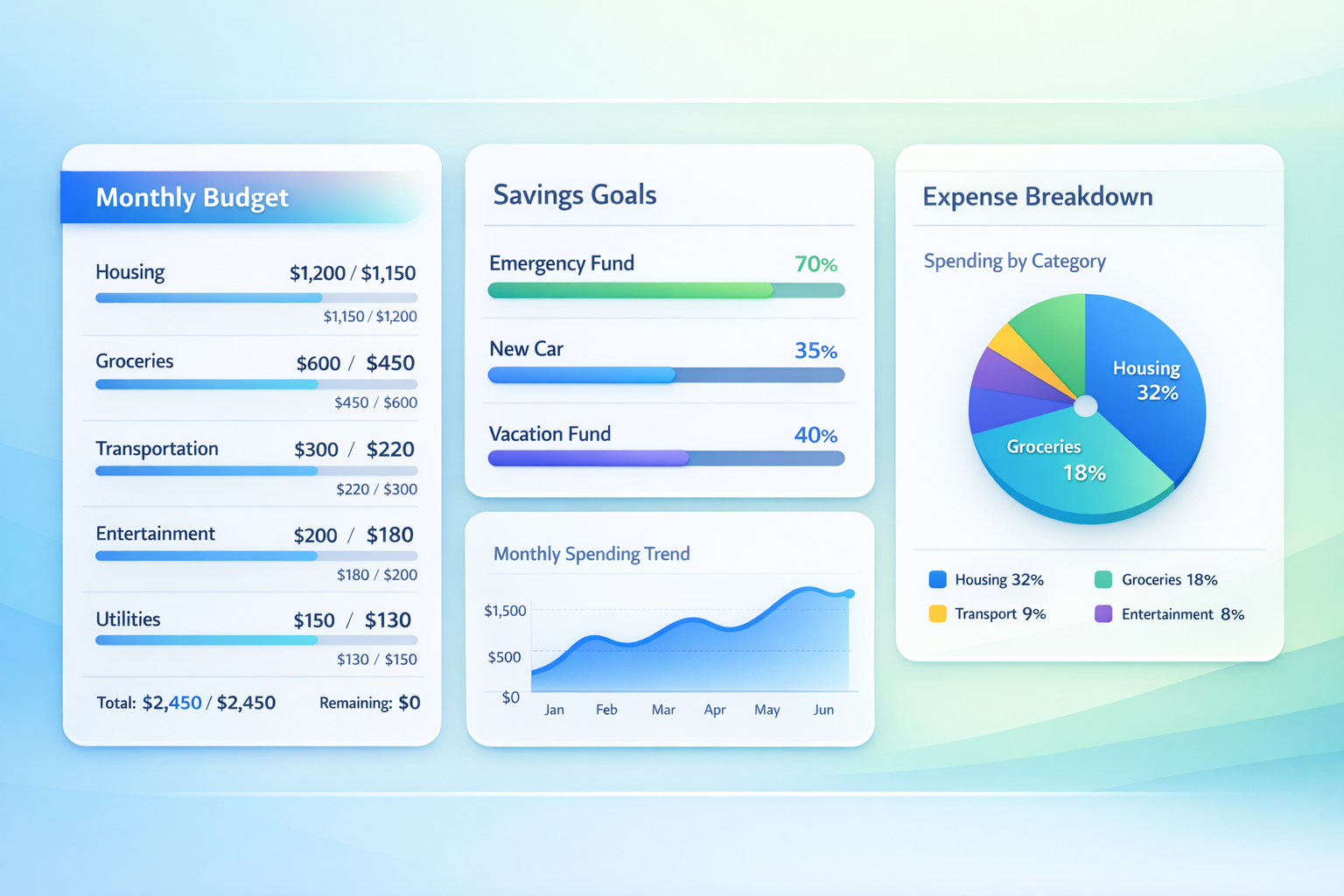
Why Most Monthly Budgets Fail
Before building a budget, it’s important to understand why so many don’t work.
Common reasons include:
- Using estimated numbers instead of real spending
- Forgetting irregular or recurring expenses
- Setting unrealistic limits
- Not reviewing or adjusting the budget as you go through the year.
Budgeting fails when it’s treated as a one‑time exercise instead of an ongoing system. A good budget evolves with your life, and it is something you always have to pay attention.
Step 1: Know Your Real Monthly Income
Start with your net income — the amount you actually receive after tax.
This includes:
- Salary paid into your account
- Side income or freelance work
- Any fixed monthly payments you rely on
Avoid budgeting with gross income, or during your investing phase budgeting with Dividends you may receive. Doing so creates a false sense of spending power and is one of the most common budgeting mistakes.
Your budget should reflect reality, not optimism.
Step 2: List and Categorize Your Expenses
Next, break down your expenses into clear categories. This is where clarity starts.
Fixed Expenses
Costs that stay mostly the same each month:
- Rent or mortgage
- Utilities
- Insurance
- Phone and internet
Variable Expenses
Expenses that change depending on habits:
- Groceries
- Transport
- Dining out
- Shopping
Lifestyle & Discretionary Spending
Non‑essential but enjoyable expenses:
- Entertainment
- Hobbies
- Travel
- Subscriptions
Many people underestimate this category — especially subscriptions, which quietly drain monthly cash flow.
Step 3: Use a Simple Budgeting Framework (50/30/20 Rule)
If you’re unsure how to allocate your money, the 50/30/20 rule is a practical starting point:
- 50% Needs — essential expenses
- 30% Wants — lifestyle and discretionary spending
- 20% Savings — savings, investments, or debt repayment
This isn’t a strict rule — it’s a guideline.
If your current numbers don’t fit this framework, that’s normal. The goal isn’t perfection, but balance and awareness.
Let me also point to some of our other blog posts, that have other types of budgeting.
- The Dave Ramsey Plan: Your Complete Guide to Financial Peace
- The Conservative Plan: Stable Financial Management for Security and Peace of Mind
- The Balanced Approach: Sustainable Financial Planning for Long-Term Success
Step 4: Track Your Actual Spending (This Is Where Budgets Succeed or Fail)
This is the most important step — and the point where most budgets break.
A budget based on estimates quickly becomes inaccurate. To make your budget work, you need real spending data.
Tracking your expenses allows you to:
- Compare planned vs actual spending
- Identify leaks and overspending
- Spot forgotten subscriptions
- Adjust categories realistically
Using ExpenseAutomator, you can upload your bank transactions and see your real spending instantly — without manual logging or spreadsheets.
Data turns assumptions into decisions.
Step 5: Review and Adjust Your Budget if needed
At least once a month, when you upload your bank statements, find time to review how that month went.
At the end of each month, review:
- Where you overspent
- Where you spent less than expected
- What categories need adjusting
- Whether your savings goals are realistic
Small monthly adjustments are far more effective than abandoning your budget altogether.
Common Monthly Budgeting Mistakes to Avoid
Even with a solid plan, watch out for these common pitfalls:
- Underestimating variable expenses
- Forgetting annual or quarterly bills
- Being too restrictive early on
- Tracking once and never reviewing again
- Treating budgeting as punishment instead of feedback
A budget should guide you — not frustrate you.
Final Thoughts: Budgeting Is About Intentional Spending
Budgeting isn’t about cutting joy or limiting yourself.
It’s about understanding your money so you can use it intentionally.
When you know where your money goes:
- Decisions become easier
- Savings grow naturally
- Financial stress goes down
The best budget is one you can actually maintain.
🚀 Create Your Monthly Budget Automatically
Building and maintaining a budget doesn’t have to be manual or time‑consuming.
With ExpenseAutomator, you can:
- Upload your bank data
- Automatically track spending
- Monitor your budget progress
- Adjust with real numbers — not guesses
Create your first monthly budget in minutes with ExpenseAutomator and stay in control of your finances with clarity and confidence.